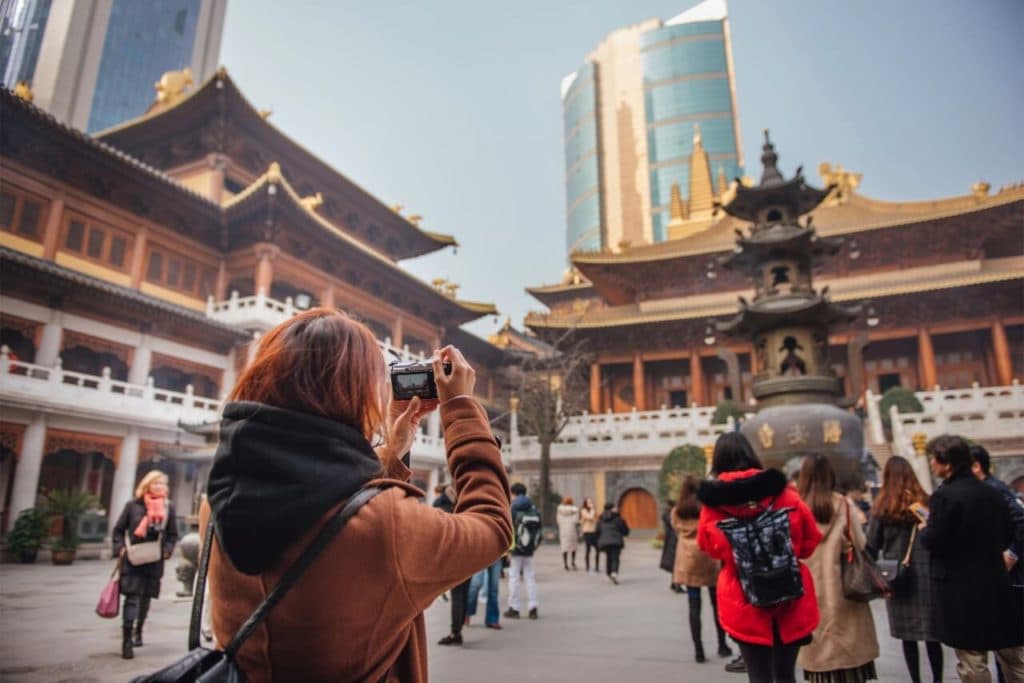
China remains one of the premier TEFL destinations in the world, with an insatiable demand for English teachers, competitive salaries, and a culture so vast and varied that no two teachers' experiences are quite the same. But the China you read about in job advertisements is not always the China you experience on the ground. Here is an honest look at what teaching English in China is really like in 2025.
Life in the Fast Lane
China's cities are technologically advanced in ways that catch most Western arrivals off guard. WeChat is not just a messaging app — it is your wallet, your bank, your food delivery service, your taxi booking app, your utility bill payment system, and your social network, all in one. You will use facial recognition to enter your apartment building, order groceries with a voice command, and ride high-speed trains that cover the distance from Beijing to Shanghai (1,300 km) in under five hours. Robotic baristas in some cafes will make your morning coffee while you scan a QR code to pay.
The sheer pace and scale of Chinese cities can be overwhelming at first. But most teachers adapt quickly and find themselves marvelling at the convenience of daily life. When everything from ordering dinner to paying rent can be done from your phone in seconds, the initial culture shock transforms into genuine appreciation.
VPNs Are Your Best Friend
The Great Firewall of China blocks access to Google, YouTube, Facebook, Instagram, WhatsApp, Twitter, and many Western news sites. For teachers who rely on these platforms for lesson planning, communication with family, or simply staying connected, a reliable VPN (Virtual Private Network) is essential. ExpressVPN, NordVPN, and Surfshark are among the most commonly recommended options by teachers currently in China.
Install and configure your VPN before you arrive in China, as downloading VPN apps from within the country can be difficult. Most teachers maintain a VPN subscription for the duration of their stay. It is an ongoing cost — typically $5 to $12 per month — but universally considered a non-negotiable expense.
Supersized Classes
If you are coming from a Western education background where a class of 30 feels large, China will recalibrate your expectations. Public school classes in China regularly contain 45 to 55 students, and in some schools, particularly in rural areas or lower-tier cities, class sizes can exceed 100 students. Yes, one hundred students in a single classroom, sitting in rows that stretch to the back wall.
Teaching classes this large requires a completely different approach. Pair work and group activities become essential because individual attention is physically impossible. Many teachers use microphone headsets to project their voice without straining. Classroom management relies on established routines, clear signals, and engaging activities rather than personal rapport with each student.
Celebrity Status
Depending on where you teach, you may experience something that rarely happens in other TEFL destinations: genuine celebrity status. In smaller cities and rural areas, foreign teachers are a novelty. Students will want selfies with you. Strangers on the street will ask to practise their English. Shopkeepers will give you extra portions. Your students will treat you like a rockstar, greeting you with excited shouts of "Teacher! Teacher!" whenever they see you outside school.
This elevated status comes with genuine respect. Teachers are highly valued in Chinese culture, and as a foreign teacher, you often receive an additional layer of curiosity and admiration. It can be overwhelming at times, but most teachers describe it as one of the most heartwarming aspects of their experience.
Culture and Colleagues
Building guanxi — the Chinese concept of relational connections and mutual obligation — is fundamental to your experience. Your relationships with Chinese colleagues, administrators, and community members will shape everything from your workload to your social life. Investing time in these relationships pays enormous dividends.
Workplace etiquette includes subtle customs that are worth learning early. At dinner with colleagues, the position of your drinking glass relative to others signals respect — holding your glass lower than a senior colleague's when toasting shows deference. Pouring drinks for others before yourself is expected. These small gestures are noticed and appreciated, and they accelerate your integration into the team.
Holidays with a Disclaimer
China has some spectacular holidays. Spring Festival (Chinese New Year) is a week-long national celebration with fireworks, family feasts, and red envelopes full of money. Golden Week in October offers another seven days off. The Mid-Autumn Festival, Dragon Boat Festival, and Qingming Festival provide additional breaks throughout the year.
The catch is the makeup workday system. When a holiday falls mid-week, the government often rearranges the calendar so that the preceding weekend becomes working days to create a longer consecutive holiday. This means you might work seven or eight days straight before a holiday, and the weekend immediately after may also be a workday. These makeup days are rarely compensated additionally — they are simply part of the national schedule. It takes some getting used to, but planning ahead makes it manageable.
China does not just give you a teaching job — it gives you a front-row seat to one of the most dynamic, complex, and rapidly evolving societies on the planet.